
5 Stone Diamond Ring
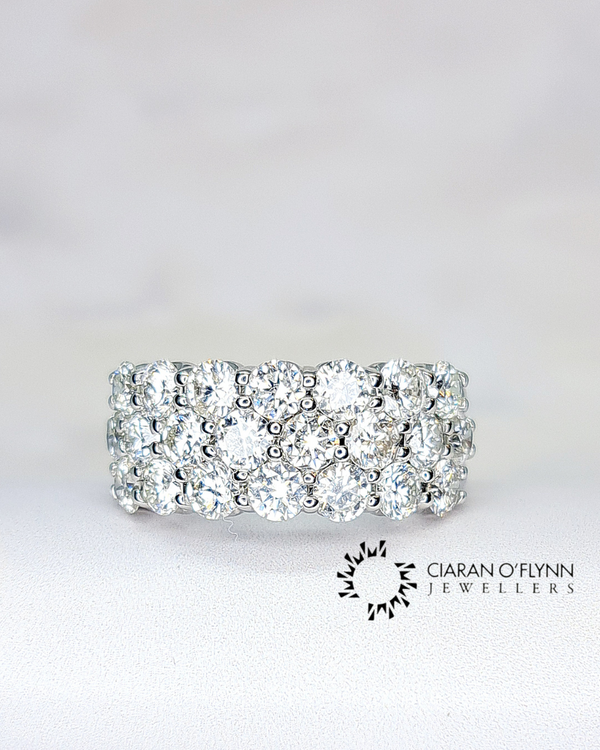
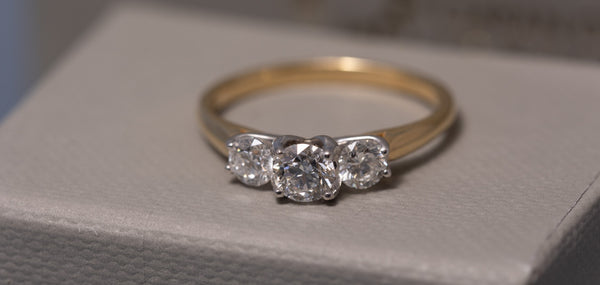
Five stone diamond rings set a row of matched diamonds across the finger, with each stone representing a chapter of a shared story: past, present, future and the two people at its centre. The format works as an engagement ring, an anniversary band, or a right-hand statement piece, and the five-stone line sits naturally alongside solitaires, three-stone rings, and eternity bands within a broader gold jewellery collection.
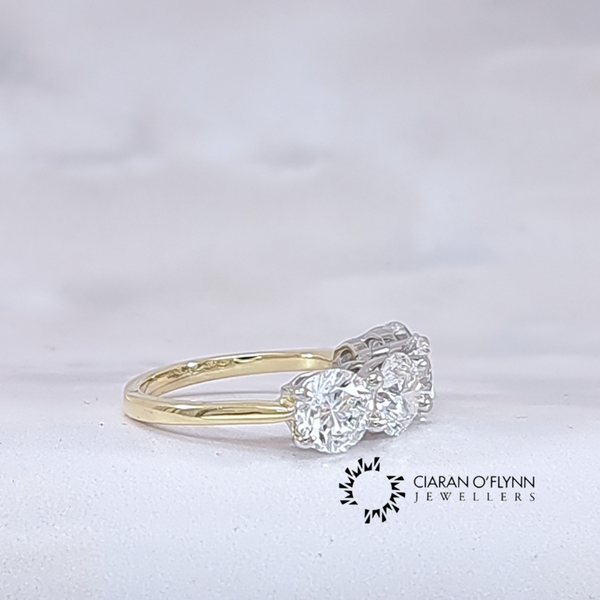
Choosing between claw-set and rub-over settings changes both the look and the light return. Claw settings lift each diamond higher, maximising brilliance and giving a vintage character that suits round-brilliant and old-cut stones alike. Rub-over settings wrap each stone in a continuous metal border, offering a cleaner, more modern profile that also protects the girdle. Yellow gold intensifies warmth in lower-colour diamonds; white gold and platinum read as cooler and more contemporary. The total carat weight is spread across five stones, so a 1ct five-stone ring carries five 0.20ct diamonds. This is useful framing when comparing price against a solitaire of equivalent total weight.
Browse the collection below, with sizing, stone advice and gold trade-ins handled in-house at our Thurles workshop.

Trusted Fine Jewellers

Nationwide Delivery

Certified Diamonds

Bespoke Ring Design

10 products
10 products



5 Stone Diamond Ring FAQs
A five stone diamond ring is most often given to mark a relationship's full timeline: past, present and future, with two additional stones representing the two people sharing that story. The five-stone format also suits anniversary gifts marking five years, or any milestone where five points of significance carry meaning. Each diamond carries equal symbolic weight, which sets the style apart from a solitaire or three-stone design where one centre stone takes the focus.
Five stone diamond rings are sometimes worn as engagement rings, though they’re more commonly chosen as anniversary or commitment gifts. The traditional engagement ring places a single centre stone as the visual focus, while a five-stone ring spreads the diamond weight equally across the band. Some couples prefer the narrative of a five-stone design for engagement, particularly when the past-present-future reading carries personal meaning. The choice is entirely personal.
Total carat weight across the five stones is the main price and presence variable. The math is straightforward, too, as a 1.00ct total five-stone ring carries five 0.20ct diamonds, which read clearly on the hand without dominating. Entry-level rings start around 0.50ct total (each stone roughly 0.10ct), the typical middle tier sits at 1.00 to 1.50ct total and 2.00ct total and above reads as a statement piece. Compare five-stone total weight against a solitaire to gauge the price difference.
Both work well, but they trade exposure for security in opposite ways. Claw settings (also called prong settings) lift each diamond above the band, maximising brilliance and visible carat weight, with a vintage character that pairs naturally with round-brilliant and older cuts. Rub-over settings wrap each stone in a continuous metal border, giving a cleaner contemporary profile and protecting the girdle from knocks. Active wearers and those who work with their hands often prefer rub-over; those who prioritise light return tend to choose claw.
Testimonials


Blog posts


